The Magic and Dangers of the Atlantic Ocean Along the Canary Coast
When we think of the Canary Islands, most of us picture eternal spring, sunshine and breathtaking volcanic landscapes. Yet the archipelago's true charm lies in the majestic Atlantic Ocean that surrounds it. But this ocean hides real dangers, and knowing about rip currents in the Canary Islands is essential to enjoy its beaches in complete safety.
The Cool Source of "Eternal Spring": Ocean Curiosities
The Canary Islands lie close to the northwest coast of Africa, yet their climate is surprisingly pleasant and never too hot. One of the keys is the cold Canary Current that hugs the coastline. Thanks to it, the sea temperature rarely exceeds 23-24°C, even in the warmest summer months, and in winter it stays around 18°C, allowing you to swim all year round.
The volcanic origin of the islands also makes their shores unique. Alongside the usual golden sandy beaches, in many spots you will find spectacular coastlines of black volcanic sand. The ocean's marine life is extraordinarily rich; spotting dolphins and whales in its waters is common, turning boat trips into an unforgettable experience.
Swimming in the Ocean: More Than Just a Quick Dip
Swimming in the ocean is a completely different experience from swimming in a lake or a pool. The constantly moving water and the power of the waves fill you with energy, but caution is crucial. The tides are notable in the Canaries, with water-level changes of up to two metres that significantly alter the shoreline and the currents.
On the beaches you will often find a flag system that should always be taken seriously:
Green Flag: Swimming is safe and conditions are good.
Yellow Flag: Swimming is allowed with caution. Going far out to sea is not advised; it is better to stay in shallow water.
Red Flag: Swimming is forbidden. Entering the water is dangerous and life-threatening.
The Invisible Danger: Rip Currents in the Canary Islands
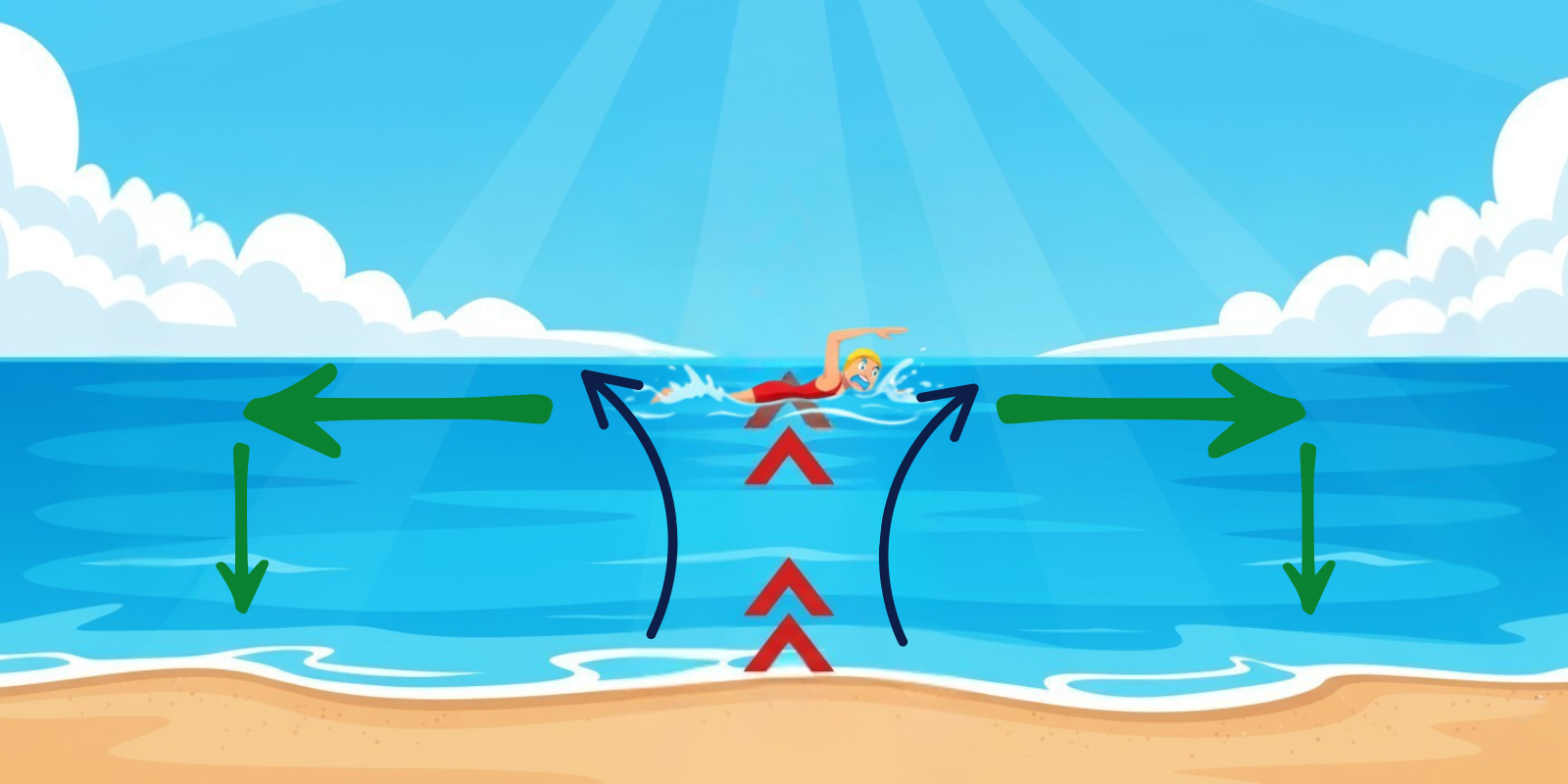
One of the biggest dangers when swimming in the ocean is the rip current. This is a narrow but powerful channel of water that flows from the shore out to sea. It can sweep away even the most experienced swimmers in a matter of seconds. Knowing how to recognise rip currents in the Canary Islands can save lives. It is vital to understand that a rip current does not pull you under, but rather drags you away from the shore.
How to recognise a rip current?
Although it can sometimes be hard to spot, there are telltale signs:
A patch of water that looks calmer or flatter along the line of the waves.
A channel of water with a different colour, often murkier.
A line of foam, seaweed or debris moving out to sea.
A choppy or rippled patch of water between the waves breaking on the shore.
What to do if a rip current catches you?
The most important thing is to stay calm. Panic is your worst enemy.
DON'T PANIC! Try to stay calm and conserve your energy.
DON'T SWIM AGAINST THE CURRENT! This is the most common and fatal mistake. Not even a professional swimmer can beat the force of the current; you will only exhaust yourself.
SWIM PARALLEL TO THE SHORE. Rip currents are usually narrow. Try to swim parallel to the coast until you escape the current.
ONCE OUT, SWIM BACK TO SHORE. When you have escaped the current, swim diagonally towards the coast.
IF YOU CAN'T ESCAPE, FLOAT. If you feel exhausted, let the current carry you. When its force eases, call for help by waving your arms and shouting.
The coasts of the Canary Islands offer an unforgettable experience, but safety always comes first. Pay attention to the signs, listen to the lifeguards and never underestimate the power of the ocean. That way, your holiday will truly be a time of rest and renewed energy.