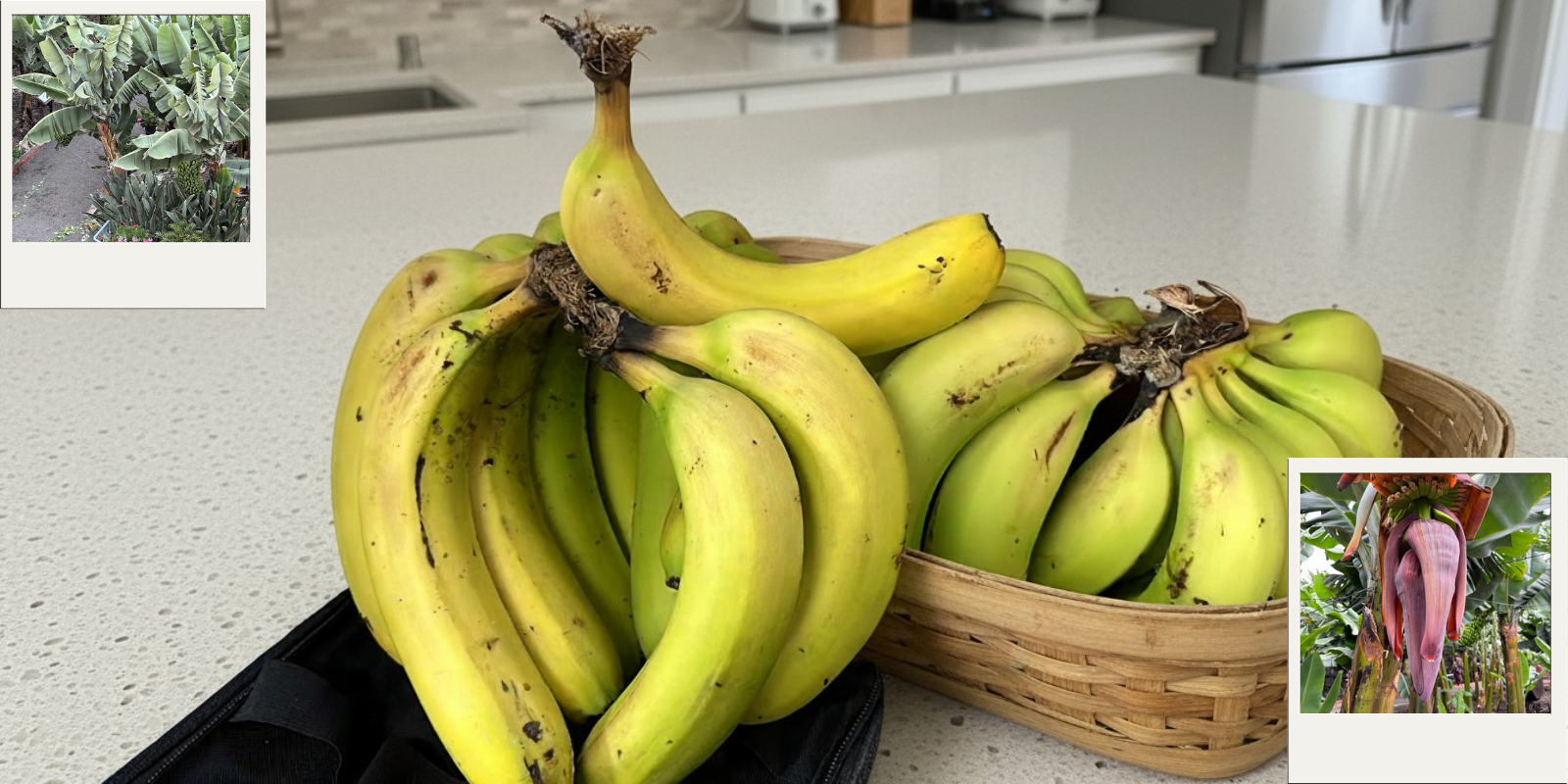
The Gold of the Canary Islands: Everything You Need to Know About the Canary Banana
Discover one of the most prized treasures of the Canary Islands: the "Canary Banana". This archipelago is far more than a tourist paradise. It is also home to a banana variety that is unique in its flavour, texture and nutritional value. Join us on this journey to uncover the history and benefits of this incomparable fruit, a cornerstone of Canarian cuisine.
The adventurous journey of the Canary Banana to the islands
The story of the Canary Banana dates back to the 15th century. Although the plant arrived early on, commercial cultivation did not take off until the late 19th century. The mild climate and volcanic soil of the islands proved ideal for the "Dwarf Cavendish" variety. This variety adapted perfectly to local conditions. Today, Canary banana farming is a pillar of the islands' economy and an integral part of their culture.
What sets the Canary Banana apart? The truth about its little speckles
Many people may not realise what makes the Canary Banana different from its Latin American counterparts. The difference is not just a matter of size. Its flavour and aroma are far more intense because it ripens more slowly, spending up to six months on the plant. Thanks to this time, its taste is more concentrated and aromatic.
What is more, its texture is juicier and creamier thanks to its high moisture content. Its appearance is also unique. The famous "speckles" do not mean the fruit is overripe; rather, they are a hallmark of its quality and perfect ripeness.
As a curious fact, the Canary Banana is the only one in the world to carry the Protected Geographical Indication (PGI) seal. This European Union certification guarantees its origin and quality.
More intense flavour and aroma: In the Canaries, the banana ripens more slowly, staying on the plant for up to six months, which is three months longer than bananas grown in tropical regions. Thanks to this longer ripening period, the fruit's flavour is more concentrated, sweet and aromatic.
Juicier and creamier: Owing to its higher moisture content, the texture of the Canary Banana is juicier and creamier, and less "floury" than that of other banana varieties.
A unique look: The dark spots on its skin, or "speckles", are not a sign that it is overripe but one of the variety's distinguishing features, indicating its quality and ideal stage of ripeness.
The secrets of banana ripening: which is the healthiest choice?
The composition and effects of the Canary Banana change constantly throughout the ripening process. From green to speckled, each stage has its own advantages.
The green banana: a friend to your gut and a helper for dieters
Rich in resistant starch: A significant portion of the carbohydrates in a green banana is made up of so-called resistant starch, which resists digestion and reaches the large intestine almost intact.
Prebiotic effect: In the large intestine, resistant starch feeds the beneficial gut bacteria, helping to maintain a healthy intestinal flora.
Low glycaemic index: Because the starch is absorbed slowly, the green banana has a low glycaemic index (around 30), so it does not cause a sharp rise in blood sugar after eating.
Lasting feeling of fullness: Thanks to its high fibre and resistant starch content, it provides a longer-lasting feeling of fullness.
The perfectly ripe yellow banana: the energy champion
Easily digestible sugars: During ripening, the starch turns into simple sugars, making the ripe banana an easy-to-digest, fast-acting source of energy.
Ideal for athletes: Thanks to its quick energy boost, it is a perfect choice before or after training to replenish energy reserves.
Higher antioxidant levels: As the banana turns yellow, its antioxidant content increases, helping the body to fend off the free radicals that damage cells.
The overripe banana with brown speckles: the sweet treasure that boosts the immune system
The sweetest and easiest to digest: At this stage, the starch has broken down almost entirely into sugar, resulting in an extremely sweet flavour and a soft, creamy texture.
Maximum antioxidant content: The overripe banana with brown spots is the one with the highest antioxidant content.
A kitchen all-rounder: Thanks to its sweetness and soft texture, the overripe banana is the perfect ingredient for cakes, banana bread, smoothies or pancakes.
The Canary Banana, a nutrient champion
Beyond being utterly delicious, the Canary Banana is a true superfood. It contains virtually no fat or cholesterol, yet it is packed with valuable vitamins and minerals.
A source of energy: Thanks to its easily digestible carbohydrates, it provides a quick, natural source of energy.
Heart-healthy: Its high potassium content helps maintain normal blood pressure, so eating it has a beneficial effect on the cardiovascular system.
A vitamin bomb: It is rich in vitamin B6, which supports the proper functioning of the immune and nervous systems. It also contains vitamin C.
Rich in minerals: In addition to potassium, it also contains significant amounts of magnesium and phosphorus, which are essential for healthy muscle and nerve function.
The high fibre content of the Canary Banana also aids digestion. Thanks to its versatility, it is an excellent choice for children, older people and pregnant women.
Next time you fancy a truly special and healthy fruit, look for the distinctive Canary banana with its speckled skin and enjoy its natural sweetness and the wealth of nutrients it contains, whatever your preferred stage of ripeness.