The Islands of Eternal Spring? The Complete Guide to the Weather in the Canary Islands
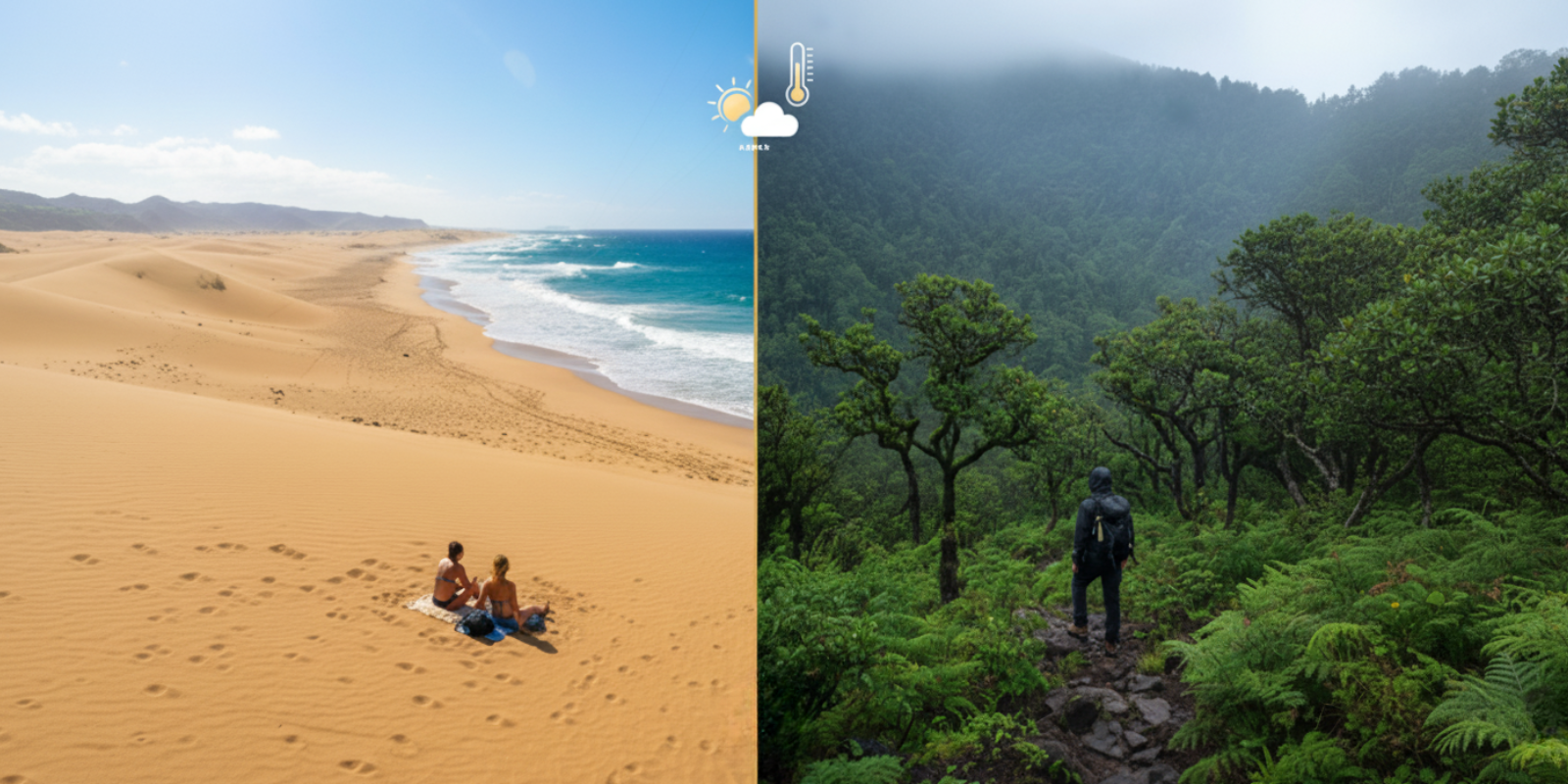
"What will the weather be like in November?", "Should I pack my swimsuit in January?" – these are the most common questions a traveller asks while planning a getaway to the Canary Islands. And the answer is both simple and infinitely complex: the weather will be good, but in a completely different way than you imagine.
Many people know the Canaries as the "islands of eternal spring", and to a large extent that's true. But the reality is far more exciting. This place is a continent in miniature, where the weather in the Canary Islands can change not just from one island to another, but from one valley to the next. Forget one-dimensional forecasts! Come along with us and discover the real, wonderfully varied climate of the islands.
The Big Picture: Why Is the Weather in the Canary Islands So Special?
Before we dive into the details, let's meet the three main characters that shape the islands' pleasant climate:
The trade winds: This steady wind from the northeast brings cool, moist air, keeping the islands from suffering an unbearable desert heat.
The Canary Current: This cold ocean current cools the coastal waters and the air, acting as a natural air conditioner.
The Azores High: This high-pressure weather system is responsible for most of the sunny, rain-free days.
The Golden Rule for Your Suitcase: Be Ready for Anything!
This is the single most important piece of advice we can give you. If you rent a car, your boot should carry a proper "survival kit":
Swimsuit and sunscreen: On the southern coasts you'll need them almost all the time. The sun is extremely strong even on cloudy days!
A light sweater and a windbreaker: For the evenings or the shadier areas in the north.
A thick sweater or jacket: If you go above 2,000 metres (e.g. Teide National Park), this is a must in winter and summer alike. The temperature drops sharply with altitude.
Hiking boots (highly recommended): Because of the islands' volcanic, uneven terrain, sturdy closed footwear with good ankle support is essential for walking.
The Islands, One by One: Choose Your Own Climate!
Although they share common traits, each island has its own climatic character.
Tenerife: The island of contrasts
This is the island with the most varied climate. Mount Teide, at its centre, acts as a shield: it stops the clouds rolling in from the north, making the south dry and sunny, while the north stays lush, green and often more humid.Gran Canaria: The continent in miniature
Living up to its nickname, here too you'll find almost every climate. The north is greener and cooler, the interior has a mountain climate, while the south, with the dunes of Maspalomas, feels like a small desert.Lanzarote and Fuerteventura: The kingdom of wind and sun
These two islands, the closest to the Sahara, are the driest and windiest. The landscape is desert-like but captivating, perfect for the beach and water sports (surfing, kitesurfing).La Palma: The green wonder
"La Isla Bonita" is the greenest and rainiest of them all, especially on its northeastern slope. The weather here is more changeable, but in return it offers unrivalled scenery for hikers.La Gomera and El Hierro: The hikers' paradise
These two smaller western islands are wild and unspoilt. Their climate is defined by humidity and lush green nature, above all in their famous laurel forests.
Special Weather Phenomena
Calima: When the Sahara says hello
Occasionally, a mass of hot, dry air arrives from the Sahara Desert, carrying fine dust suspended in the air. The sky turns yellowish, visibility drops, and the temperature suddenly soars.Panza de burro: "The donkey's belly"
On the northern slopes it's common to see a dense, low-lying sea of clouds. It's a phenomenon created by the trade winds that usually brings no rain, just a cool, damp feeling.
Temperature vs. "Feels Like": Why You Shouldn't Trust the Numbers
This is the other key point. If the forecast says 24°C, it could mean a pleasant summery warmth or cool, spring-like weather. It all depends on where you are, how strong the wind is, and whether the sun is out. In a wind-sheltered spot in the south, those 24°C can feel like 30°C.
Instead of a Conclusion: The Freedom to Choose
Many people think the weather in the Canary Islands is unpredictable, but the reality is far better. Here, the weather doesn't force you to compromise; you're the one who chooses your own climate.
Is it cloudy in the north? Hop in the car and within half an hour you'll be sipping a coffee under the southern sun. Too hot on the coast? Set a course for the silence and cool of the mountain pine forests.
That's the real magic of the Canaries: it isn't unpredictability, it's freedom of choice. The freedom to live through several springs and summers in a single day, exactly as you please. It's this freedom that makes the islands unique – and that offers a new adventure every single day!